'The Struggle is Enough' – Stop Making Bad Things Worse
I listen to a lot of podcasts. More often than not they’re auditory diazepam; sonic fluff to soften the tedium of hanging out a wash or chopping onions. But now and again I tune into something a little more substantial. And at the end of a recent episode of Hidden Brain, a listener called Jocko sent in this observation …
‘The struggle is enough.’
I’ve found myself repeating those four words ever since. When my creaky middle-aged body refuses to let me to do the thing I love and run in the hills. Stop moaning Richard, the struggle is enough.
When, after a long day in the city, the train from London to Wales is delayed, yet again, due to some cryptic cause like ‘an obstruction the line’. Chill out, relax, you will, eventually, get home. The struggle is enough.
Or when things blow up with my teenage son and I hear the clatter of breaking objects from his room. Pause. And breathe. The struggle is enough.
Life is full of struggle: sometimes trivial (peering wistfully out of the train window into the darkness, wondering if you’ll ever make it home); sometimes profound (the fear of failing as a parent). But though we have no say in when it will strike, we do have a say in how we respond.
The Buddhists have a metaphor for this. Life fires its arrow at you, and it hurts. But then, all too often, we fire a second arrow into ourselves – the resentment, the railing, the ‘why me?’ Do we accept the first arrow and deal with the pain? Or, in our rage against the injury, do we inflict a second and make it worse?
Which brings me to the psychiatrist Viktor Frankl. He was born Jewish in Vienna at the turn of the twentieth century. In the early stages of the Second World War Frankl was offered an escape from the Nazis with a visa to the United States, but, not wanting to leave his parents behind, he let it lapse. Shortly afterwards he and his extended family were sent to the concentration camps. Frankl spent time in Theresienstadt, Auschwitz, and Dachau and although, miraculously, he survived, his wife, brother and parents did not.

Psychiatrist and author Viktor Frankl
During his time in the camps Frankl observed that people responded to the horrors of incarceration in different ways. In his book Man’s Search for Meaning (published in 1959 and now having sold 12 million copies) he describes how some prisoners would give up hope, refusing to get up, or suddenly smoking all the cigarettes they’d been saving to trade for food, while others were able to transcend life behind the barbed wire fence, if only temporarily, by remarking on a striking sunset or making up stories to share with their fellow prisoners.
He writes, ‘Everything can be taken from a man but one thing: the last of the human freedoms – to choose one’s attitude in any given set of circumstances.’
As he looked around at his fellow prisoners, all of whom were of course in a desperate plight, Frankl could see that those who seemed most likely to survive were the ones who were not fighting their circumstances, or mourning what they’d lost, but attempting, against the odds, to make the best of their atrocious situation. And for him this was a choice: ‘Between stimulus and response there is a space. In that space is our power to choose our response. In our response lies our growth and our freedom.’
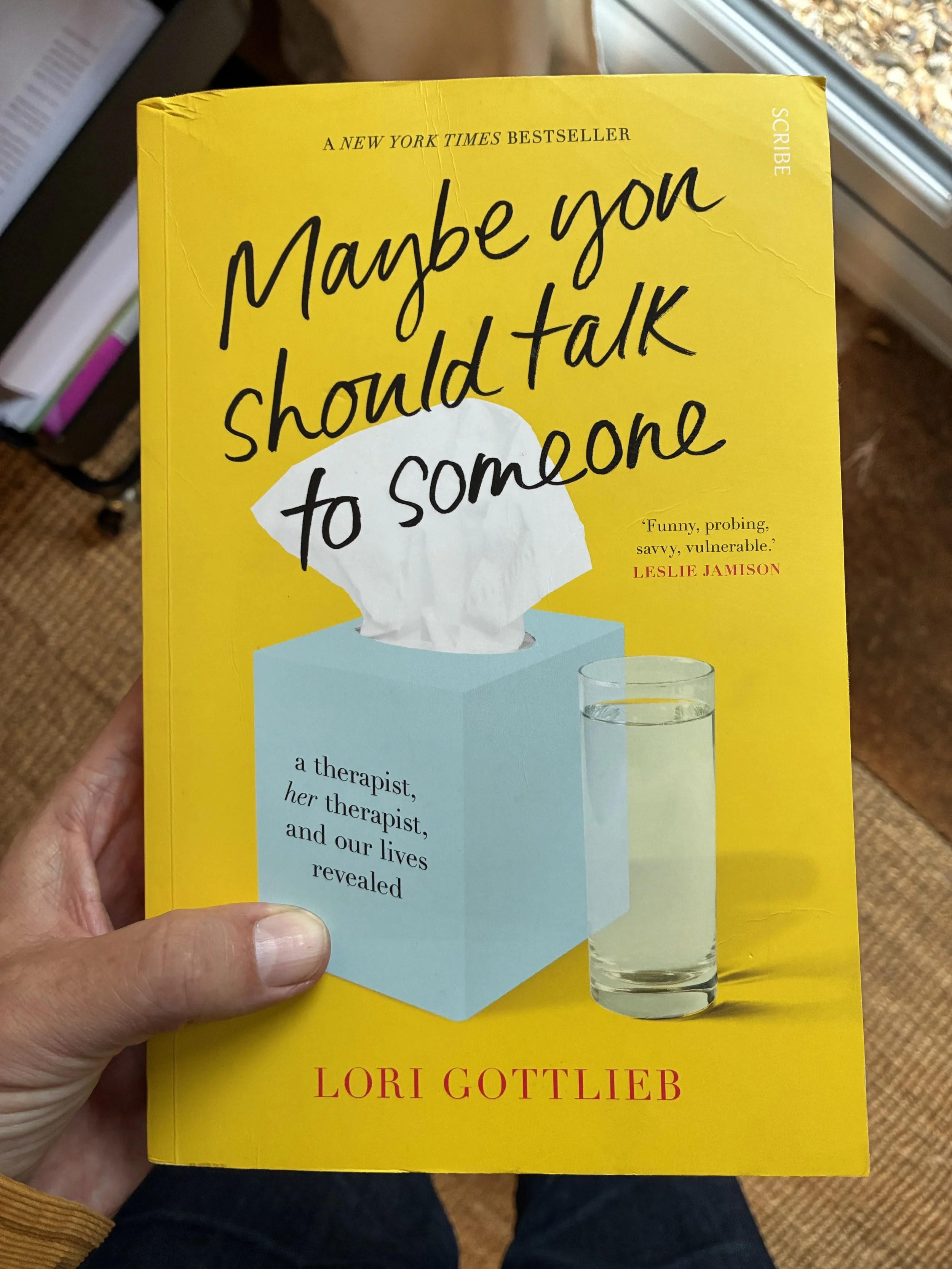
The psychotherapist Lori Gottlieb, in her book Maybe You Should Talk to Someone, draws a useful distinction between reacting and responding. To react is reflexive, an animal response. To respond is deliberate, an act of will.
In other words, when something bad happens, we have an immediate emotional reaction, shaped by our experience or instincts. But we also have the chance to override that reaction with a conscious response.
As soon as the conductor announces that your train is going nowhere for the forseeable, you groan, frustration builds and cortisol floods your system as the long minutes crawl by. That’s the reaction. And most of us will give in to it. But what if you choose to respond instead and accept that this is a situation out of your control, that being grumpy will only make it worse and look for a way to reframe this unforeseen event, not as a problem, but an opportunity? Buy a beer from the drinks trolley, take the time to call your mum, read that article that’s been lingering in your inbox … and put the second arrow back in its quiver.
A similar thought also occurred to the Stoic philosopher and former slave Epictetus: ‘Men are disturbed not by things, but by the views which they take of them.’ And nearly two thousand years later Epictetus was an inspiration to the psychologist Albert Ellis – who developed a tool I sometimes draw on when I’m coaching. It’s called the ABC model …
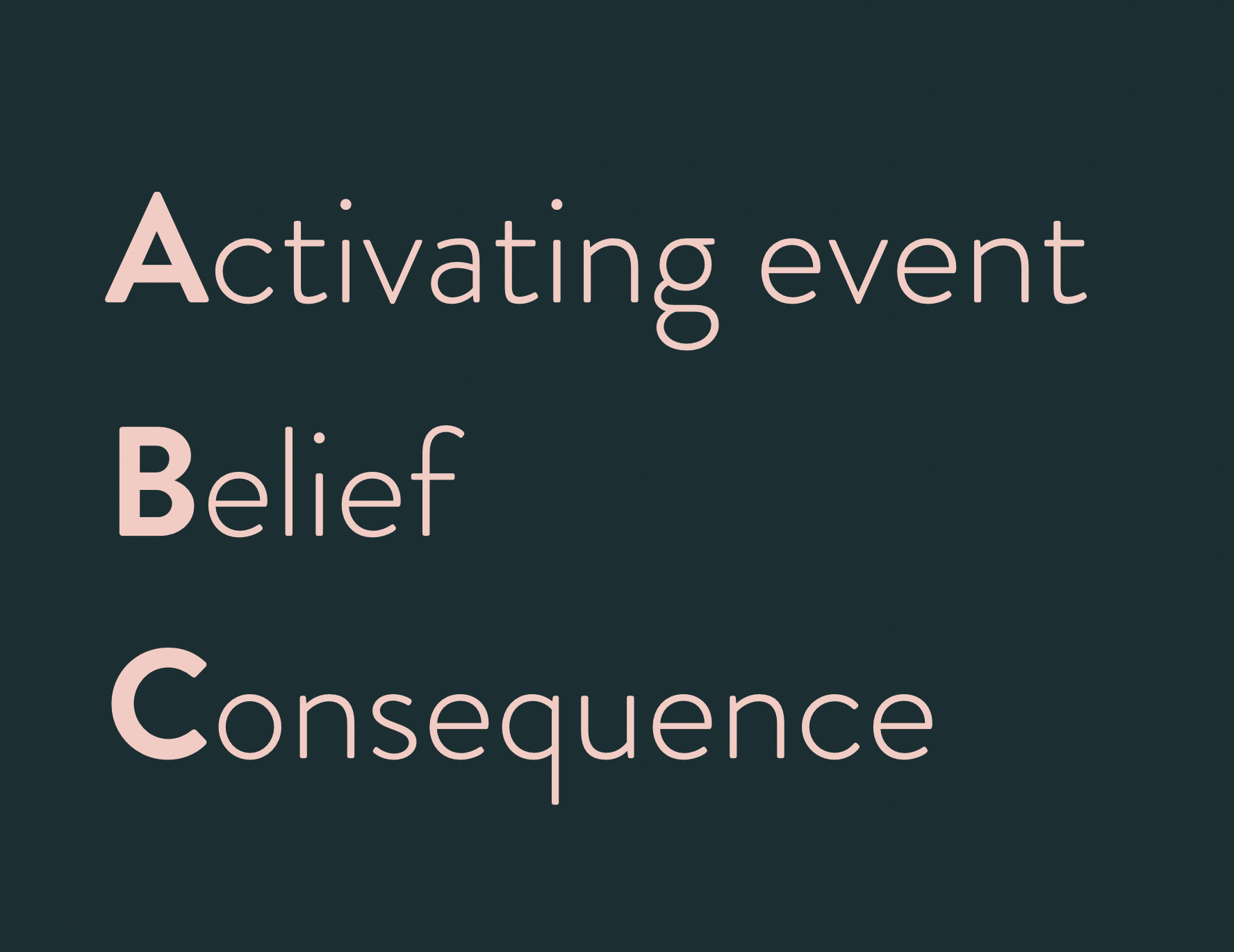
Something happens (A). We hold a belief about it (B). And that belief, more than the event – which in itself is really nothing more than just something that’s happened – induces how we feel and what we do next (C).
The trick is to step back and look at B. Ask yourself two questions: is this belief true? And is it helpful? If the answer to either is no, you swap it for one that is.
Let’s try the ABC model with one of those arrows that every professional creative knows only too well: you’ve spent weeks working on a brief, you love your idea, you pitch it to the client. It bombs.
Now, if you’re on similarly intimate terms with self-doubt as I am, the belief that may well loom into view at this point is ‘Shit, maybe I’ve lost my touch.’ And the consequence of this belief is that next time round you’ll end up playing it safer than you should, or you’ll be unduly hesitant and stumble your way through the presentation.
So you rewind to the belief: I’ve lost my touch. Is this true? Of course it isn’t. You’ve done loads of these things. You’ve got a good portfolio and you know that pitches are lost for 101 reasons – politics, hidden agendas, ley lines, disturbances in the force.
Is believing you’ve lost your touch helpful? Nope, absolutely not. It’s going to kill your confidence and killing your confidence kills your creativity.
So here’s another belief: the idea was good, but I didn’t build a compelling enough case for the client to buy it. Is this true? Hmmm, though it feels uncomfortable to admit it, maybe. Is it helpful? Well, yes. Though a bitter pill to swallow, it creates the impetus for you to review the pitch in the cold light of day, look for the logic gaps, the missing reference, the places where you could have changed your delivery. And the consequence? A sharper presentation next time.
Life is full of beautiful moments. But there are some really shitty ones too. The longer you spend shuffling along this mortal coil the more chances there are for fate to trip you up, spit in your eye and give you a firm kick in the privates while you’re spreadeagled on the floor. Moments like these hurt. But once they’ve happened, you have a choice: do you make them hurt even more by wishing they’d never happened? Or do you accept them, allow yourself to feel the pain and then find a way to move on?
Between you and me, this is something I’m wrestling with in my own life right now. Without wishing to compromise the confidentiality of my youngest son, let’s just say I alluded to the situation a few paragraphs back. My first thought is that I’ve failed somehow as a father. Is this true? I can’t say for sure, but, if I’m really honest with myself, I don’t think so. Is it helpful? No, not to me, and certainly not to my son. The belief I’m holding on to instead is that he’s a teenager going through a tough time and my job is to be there as a good-enough parent with the love he needs to see his way through.
We don’t know when the next arrow is coming, just that sooner or later it’s going to land. But, when it strikes, there’s really no need to follow up with another arrow of your own. Because, as Jocko very wisely observed, ‘The struggle is enough’.
Curious about coaching? Hit the button below to find out more …