Yayoi Kusama, A Tribute
I was saddened to read about the death of Yayoi Kusama last week. Rather like David Hockney she seemed to be one of those artists who would go on forever.
Looking back now on her life, her work, the prizes, the exhibitions and the endless queues to see her shows, it’s kind of incredible when you understand just how long the odds of her ever becoming an artist were.
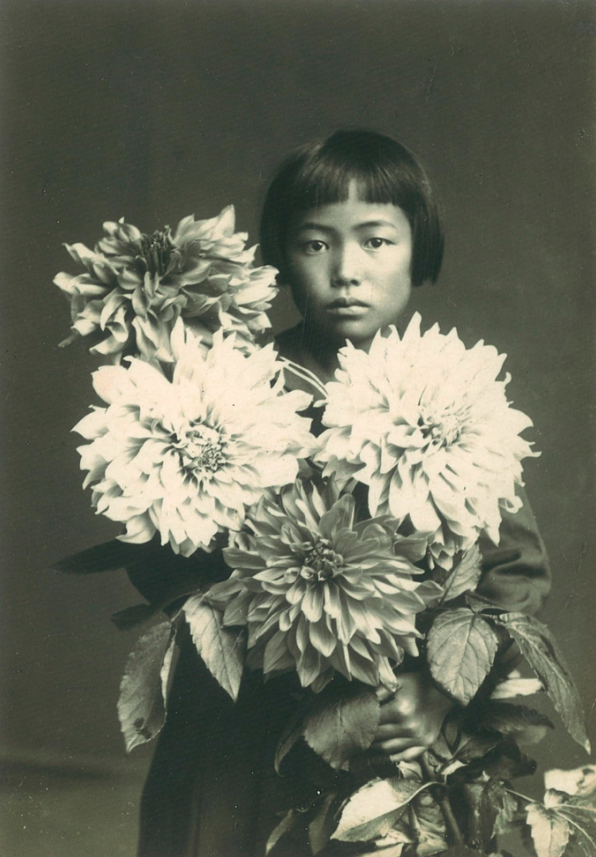
Yayoi as a child
She was the daughter of a wealthy family who were determined that she would marry well and be an obedient wife. Art had no place in this plan and they would hide her materials and destroy her canvases. Yet she refused their entreaties to conform and continued to paint, eventually fleeing to New York where she had to contend with the thinly-veiled misogyny and racism of a white male-dominated art scene. But the greatest of all the trials Yayoi faced in her long life were the hallucinations that began when she was just ten years old.
She was looking at a red floral tablecloth when the pattern began to spread, enveloping the room, her body and then the entire universe, reducing Yayoi to nothingness. These hallucinations were terrifying and profoundly isolating. But, over time, Yayoi learned that there was one way she could make some kind of sense of them, and that was to use them as inspiration. Look now across her life’s work and you can read almost all her paintings, installations and happenings as explorations of that feeling of self-obliteration that was the theme of her psychoses. The dots, the mirrors, the body paint, the repeated forms, all obscure the individual self.
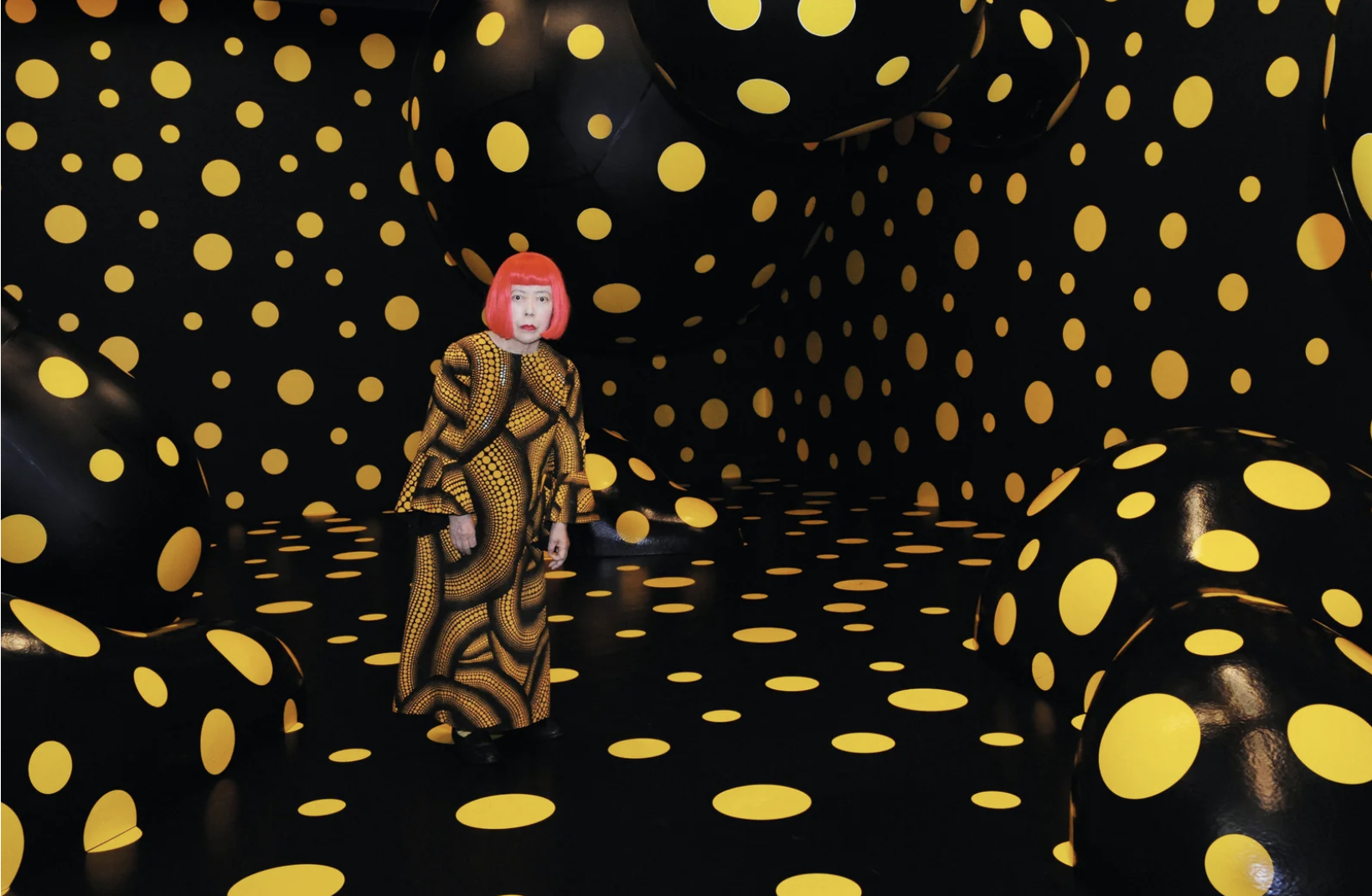
Art was everything for Yayoi. It wasn’t just a career or vocation, it literally saved her life. Without art her mental illness would have been too much. Shortly before she died she said, ‘If it were not for art I would have killed myself a long time ago.’ She voluntarily committed herself to a psychiatric institution in 1977 and lived there for the remainder of her life, but would leave each day to walk to her studio and make work.
So now, as I look back on her life, I see it as a testament to the transformative power of the creative act. The way art enables us to take some of the most difficult troubling and traumatic experiences we have as human beings and turn them into things that have value and meaning for oneself and others. Yayoi was just five feet tall, but her courage was beyond measure.
She once said, ‘From the point of view of one who creates, everything is a gamble, a leap into the unknown.’ And she was always prepared to take the leap.
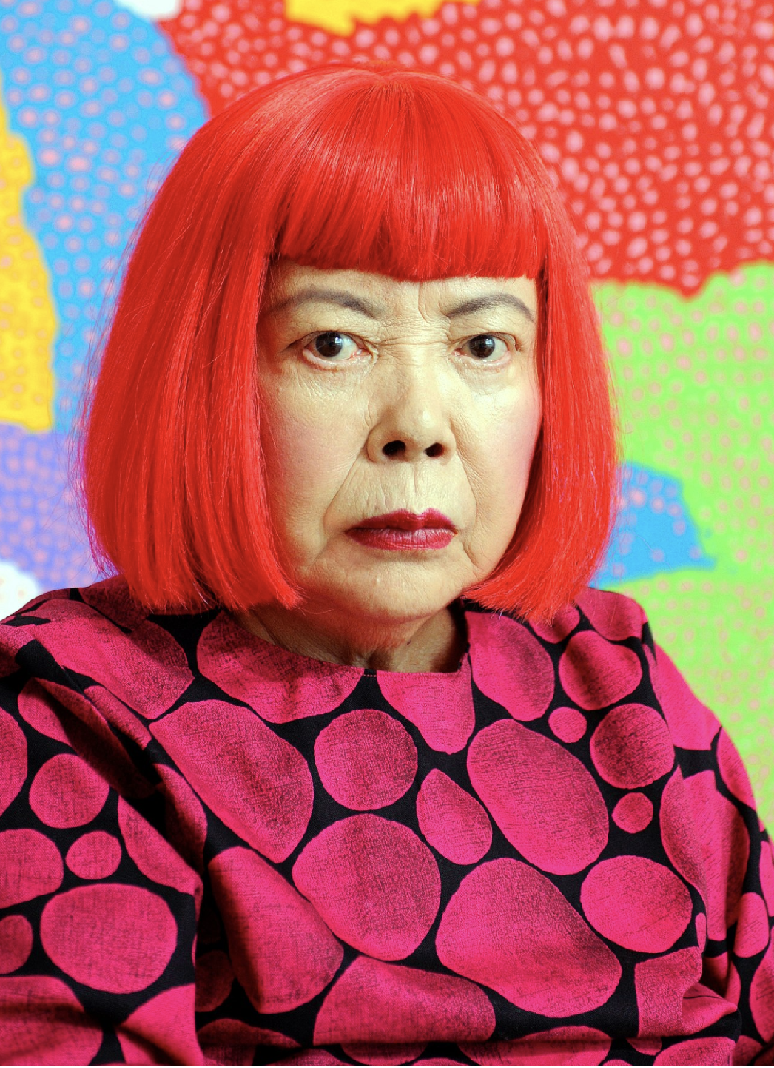
Yayoi Kusama, 1929 - 2026