Jane Goodall's Surprising Asset

PHOTOGRAPH BY VICTORIA WILL
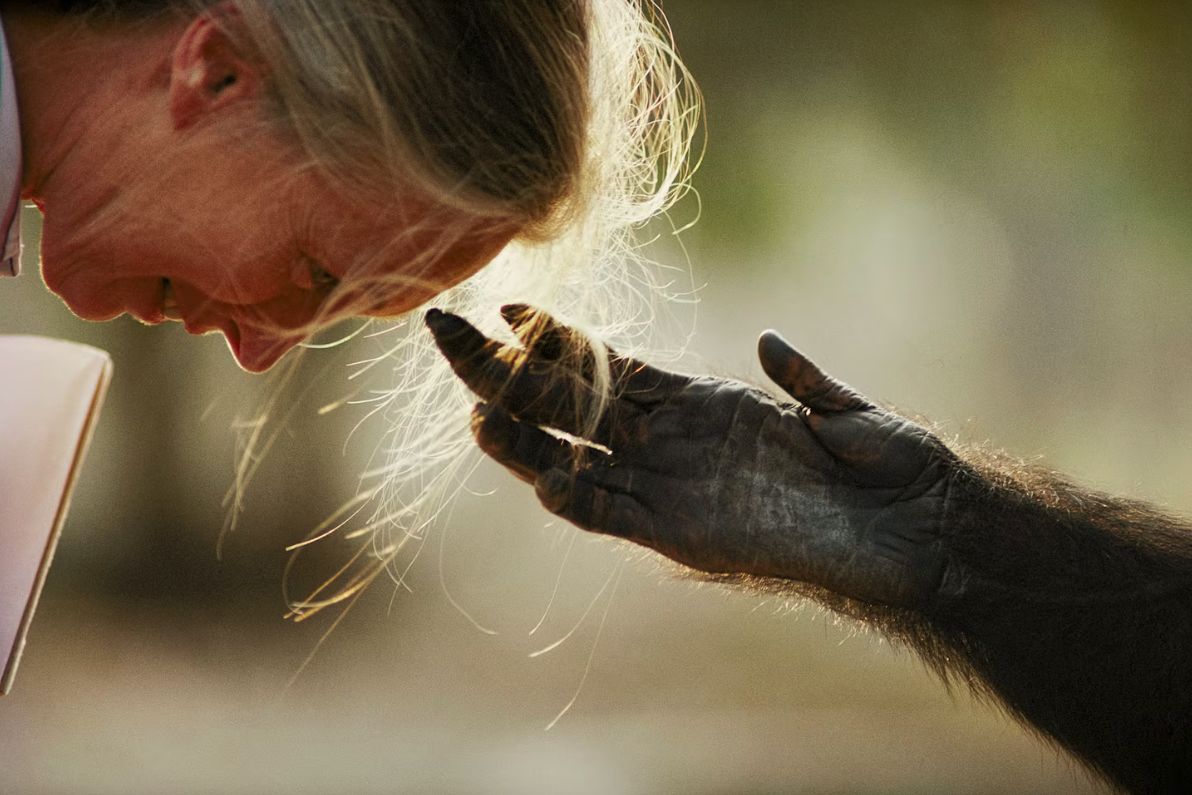
I’ve been reading about Jane Goodall recently. Her groundbreaking work with primates revealed the many similarities we share with them, and shattered the myth that there is ‘an unbridgeable chasm’ between us and the rest of the animal kingdom.
But what I didn’t known was that at the time she was making these discoveries she’d not been to university. And that if she had, she might never have made them.
In her memoir she writes, ‘As I had not had an undergraduate science education I didn't realize that animals were not supposed to have personalities, or to think, or to feel emotions or pain. I had no idea that it would have been more appropriate to assign each of the chimpanzees a number rather than a name when I got to know him or her. I didn't realize that it was not scientific to discuss behaviour in terms of motivation or purpose. And no one had told me that terms such as childhood and adolescence were uniquely human phases of the life cycle, culturally determined, not to be used when referring to young chimpanzees. Not knowing, I freely made use of all those forbidden terms and concepts in my initial attempt to describe, to the best of my ability, all the amazing things I had observed at Gombe.’
It was only because she didn’t know about the contemporary conventions of biological science that she was able to see beyond them.
PHOTOGRAPH BY MICHAEL NICHOLS
There are, I think, some valuable insights here …
The first is to recognise that something that may feel like an insurmountable limitation, the kind of hurdle that it’s just too challenging to jump, can - if you have the courage to proceed anyway - turn out to be an advantage. It’s easy to use the fact of not having everything perfectly in place as an excuse for not getting started. Jane had a passion for observing animals; for her, this was enough.
The second is to be wary of your understanding of ‘the way things are done’. There’s a big difference between knowing the parameters and being unwittingly hemmed in by them. Genuine innovation is often born out of ignorance and accident, rather than knowledge.
And the third is for leaders. If you have younger, inexperienced people working with you, know that they have an asset which will soon be lost – their professional naivety. Encourage them to explore playfully, without the fear of breaking rules or transgressing conventions. They’ll learn those conventions in time - and find themselves subject to them, just like the rest of us.
Despite her outsider status Jane’s work was later recognised by the academic establishment when she became only the 8th person to be admitted by Cambridge University to study for a PhD without having completed an undergraduate degree.